
Criminal Cases in the Motley County Courts
Local criminal cases divide among three trial levels. The 110th District Court hears felony matters. It serves Briscoe, Dickens, Floyd, and Motley Counties, but local filings stay with the combined County and District Clerk in Matador. The constitutional Motley County Court handles ordinary county criminal jurisdiction, including Class A and Class B misdemeanors. There is no county court at law. The countywide Justice Court handles qualifying Class C, traffic, and other fine-only matters. Its ticket payment page is a payment channel, not proof of case status or warrant clearance.
The official 110th District Court page shows the four-county bench and its Floydada office.
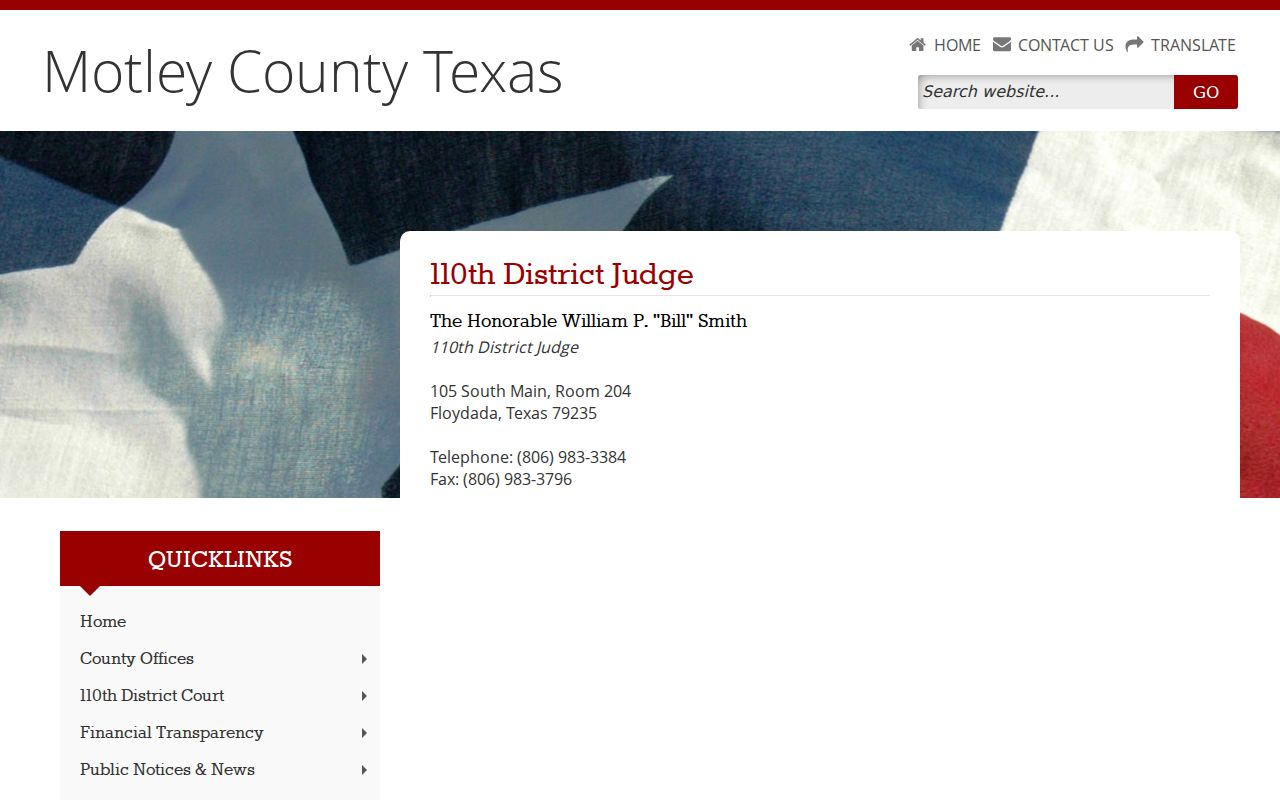
The image helps explain why the judge may work from Floydada while the local case file remains at the Matador clerk counter.
Motley County Court Level Guide
Choosing the wrong counter can hide a case that does exist. A felony indictment belongs in the district file. A prosecutor-filed information for an ordinary Class A or B misdemeanor belongs at the county level. Eligible fine-only complaints may sit with the Justice Court. Appeals do not remain at the trial level. The Seventh Court of Appeals serves Motley County after an appeal is perfected.
| Court | Criminal role | Official contact |
|---|---|---|
| 110th District Court | Felony and general district jurisdiction | Motley clerk, 806-347-2621; judge office, 806-983-3384 |
| Motley County Court | County criminal cases, ordinarily Class A and B misdemeanors | PO Box 719, Matador; 806-347-2334 |
| Motley Justice Court | Qualifying Class C, traffic, and fine-only matters | PO Box 657; 806-347-2204; weekdays 9 a.m. to noon |
| Seventh Court of Appeals | Appeals from the serving trial courts | Official appellate site |
The prosecution offices also differ by case level. The 110th District Attorney page documents the district prosecutor’s office.
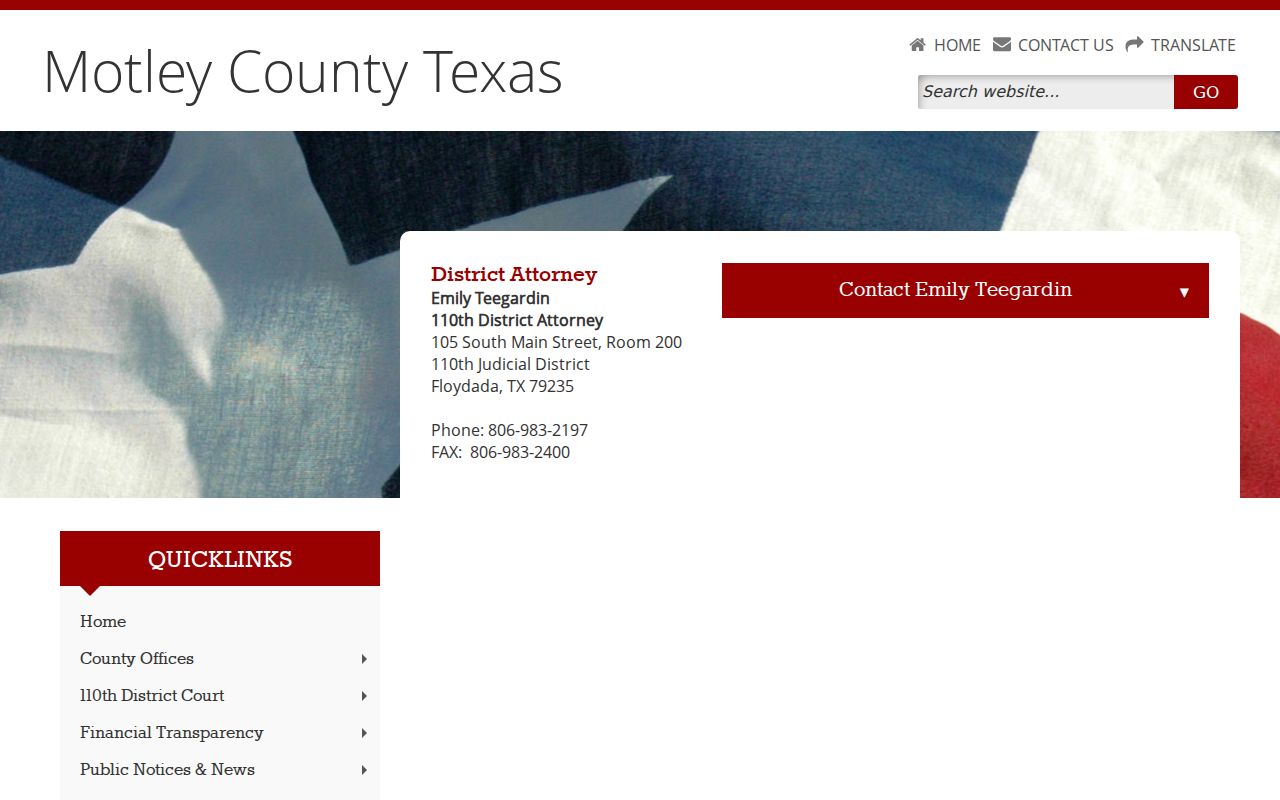
That office may create or present prosecution material, but the filed pleading and final judgment belong in the clerk’s local court file.
The Motley County Attorney page supplies the separate local prosecutor contact.
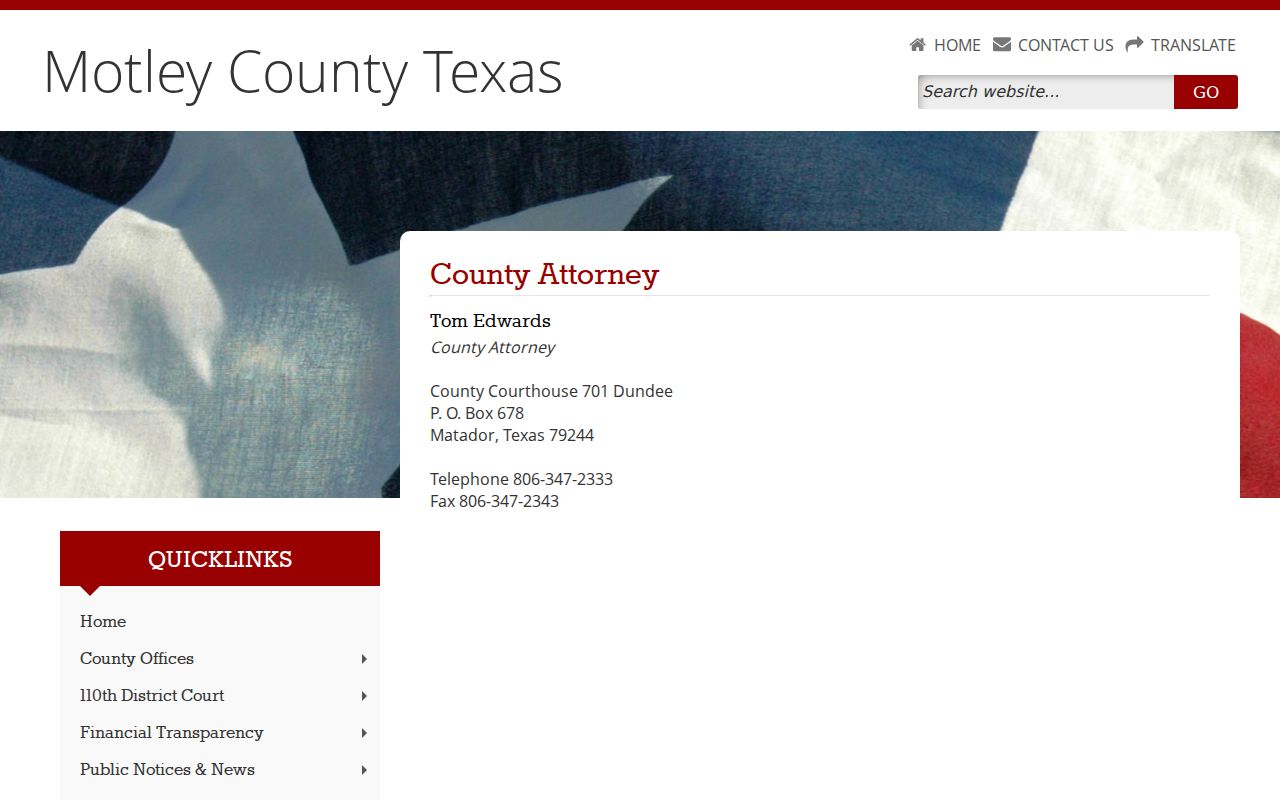
Keeping those roles distinct helps a requester ask the clerk, rather than a prosecutor, for the authoritative filed case record.
How to Search Case Records
The combined clerk directs readers to iDocket for local public records recorded since 2003. The service requires a subscriber account. Its public material says plan-dependent users may search a plaintiff or defendant name or a state or cause number, view parties, attorneys, and calendars, and buy document images. It does not expose Motley-specific result columns before sign-in. For that reason, do not assume a status code, docket event, or image is available until the live account shows it.
- Decide whether the matter is a district felony, county misdemeanor, or Justice Court case before searching.
- Open iDocket and sign in with the subscriber user ID and password, then use a party name or state or cause number if the plan permits.
- Compare the court, filing date, party display, and calendar details so a similar name does not become a false match.
- Read the docket as an index. Note the charging instrument, hearings, plea, judgment, sentence, and any appeal entry that is actually shown.
- Call or visit the combined clerk for pre-2003 files, missing images, certified copies, and authoritative disposition confirmation.
Only the sign-in fields below were verified without crossing the subscription gate.
| Field label | Type | Required | Notes |
|---|---|---|---|
| User Id | Text | Yes | Maximum 15 characters; shown as “Subscriber Username.” |
| Password | Password | Yes | Subscriber credential. |
| Sign In | Button | Not applicable | Forgot Password, Subscribe, and Contact Support links are also present. |
Motley County iDocket Case Gate
iDocket is not a free statewide court index. It is the clerk-designated subscription service for Motley County records since 2003, and its own terms warn about accuracy, timing, and completeness. re:SearchTX is not a substitute: the Texas Judicial Council reported that its large document collection excluded criminal case records. A missing online result may mean an older file, a lag in entry, a search mismatch, or a document that must come from the clerk. It does not prove that no Motley County criminal case exists.
The iDocket entry page shows the service selected for these local records.

The sign-in image makes the account gate clear before a reader expects a free Motley County docket search.
The vendor’s subscription and CHIPS page describes plan features and document-image pricing.
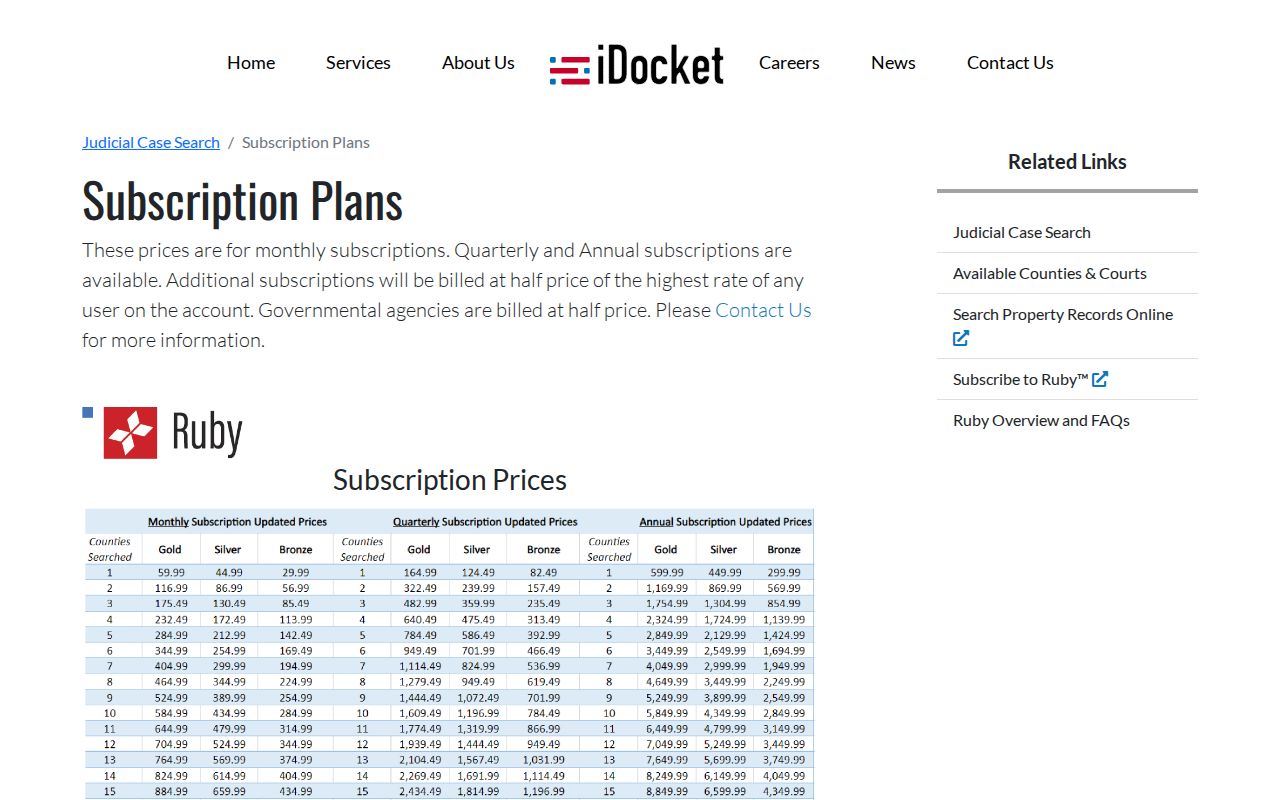
Images require CHIPS and a signed agreement, and downloaded PDFs are watermarked, so confirm the current checkout total before buying a court document.
What the Case File Shows
A Motley County court file follows the charge after it has been filed. It can identify the court, cause number, lawyers, charging paper, hearings, motions, plea, outcome, and sentence. This is a different product from the officer’s incident narrative or a holding facility’s booking sheet. When the goal is to learn whether the intake charge changed, whether the case was dismissed, or what sentence was ordered, the clerk’s judgment and docket are the key records.
| Case Number & Court | The cause identifier and the Motley County trial level responsible for the filed matter. |
|---|---|
| Charging Document | The complaint, misdemeanor information, or felony indictment stating the filed allegation. |
| Docket Entries | The chronological register of filings, settings, motions, orders, and other case acts. |
| Hearing Dates | Arraignment, pretrial, plea, trial, sentencing, and other settings recorded by the court. |
| Disposition & Judgment | The literal outcome, such as dismissal, acquittal, deferred adjudication, or conviction. |
| Sentence & Conditions | Any confinement, community supervision, fine, cost, restitution, or other term in the order. |
Note: Requested fields are not a claim that every item appears in the subscription view; the clerk controls the authoritative Motley County file.
Motley County Case Disposition Terms
Read the outcome word by word. An arrest or indictment is not itself a conviction. A dismissal ends the filed case without a judgment of guilt. An acquittal follows a not-guilty determination. A no-bill means the grand jury did not return an indictment. Deferred adjudication postpones a guilt judgment during community supervision and may still appear in the Texas DPS public product. A conviction is a judgment of guilt. These outcomes have different effects, so the final signed judgment matters more than a short status label.
- Arraignment
- The formal court appearance for the charge and plea.
- Docket
- The chronological register of case activity.
- Information
- A prosecutor-filed charging instrument used for eligible misdemeanor cases.
- Indictment
- A felony charge returned by a grand jury.
- Disposition
- The recorded outcome of the case.
For a record that looks incomplete, obtain the certified disposition from the Motley County clerk before asking DPS to correct a missing statewide outcome.
Stages of a Criminal Case
A Motley County criminal case may start with an arrest and magistration, but the court file takes shape when a complaint, information, or indictment is filed. Arraignment records the charge and plea. Pretrial work may add motions, notices, discovery-related filings, bond orders, and hearing entries. The case may end through a plea, trial, dismissal, acquittal, or deferred route. A judgment and sentence then state the legal result. An appeal can move review to the serving appellate court without erasing the trial file.
Case flow: Charges Filed › Arraignment › Pretrial › Plea or Trial › Disposition › Sentencing
The flow explains why a same-day arrest may not yet appear in iDocket and why a later clerk judgment gives a stronger account of the outcome.
Motley County Criminal Appeals
An appeal creates a second record layer. The trial clerk keeps the original Motley County case, prepares the clerk’s record as required, and records the appeal-related entries. The appellate court keeps its own docket, briefs, orders, and opinion. The Seventh Court of Appeals is the official appellate destination serving Motley County.
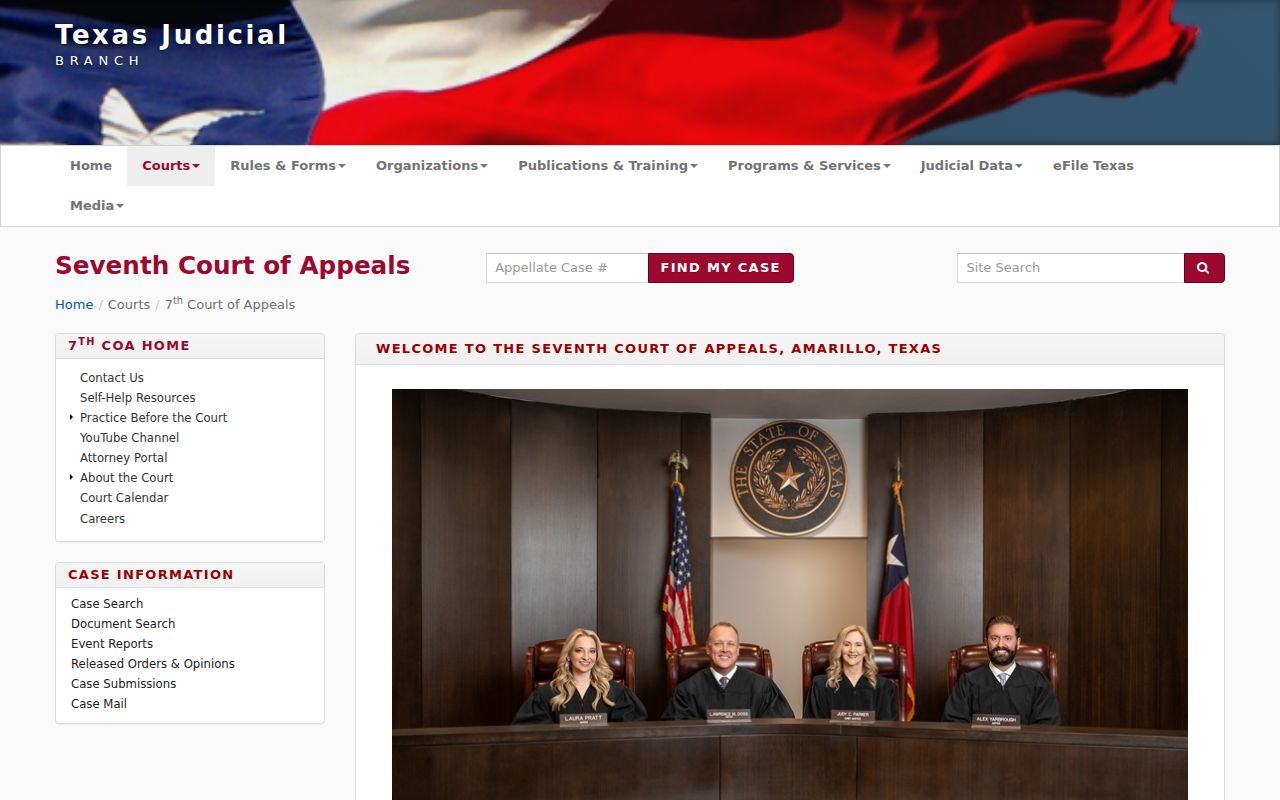
The appellate site helps trace review after the local judgment, while the combined clerk remains the source for the original Motley County pleadings and sentence.
Access & Restrictions
Texas separates court files from ordinary executive-branch public information. Courts are not subject to the Texas Public Information Act in the same way as a sheriff. Adjudicative case files follow court-access law, while judicial administrative records may fall under Texas Rule of Judicial Administration 12. Juvenile material, victim information, sealed records, expunged matters, and other confidential data may be withheld or redacted. An online view can also be narrower than the record available through the clerk.
The county’s public-information policy document is relevant when the requested material belongs to a county office rather than the adjudicative court file.
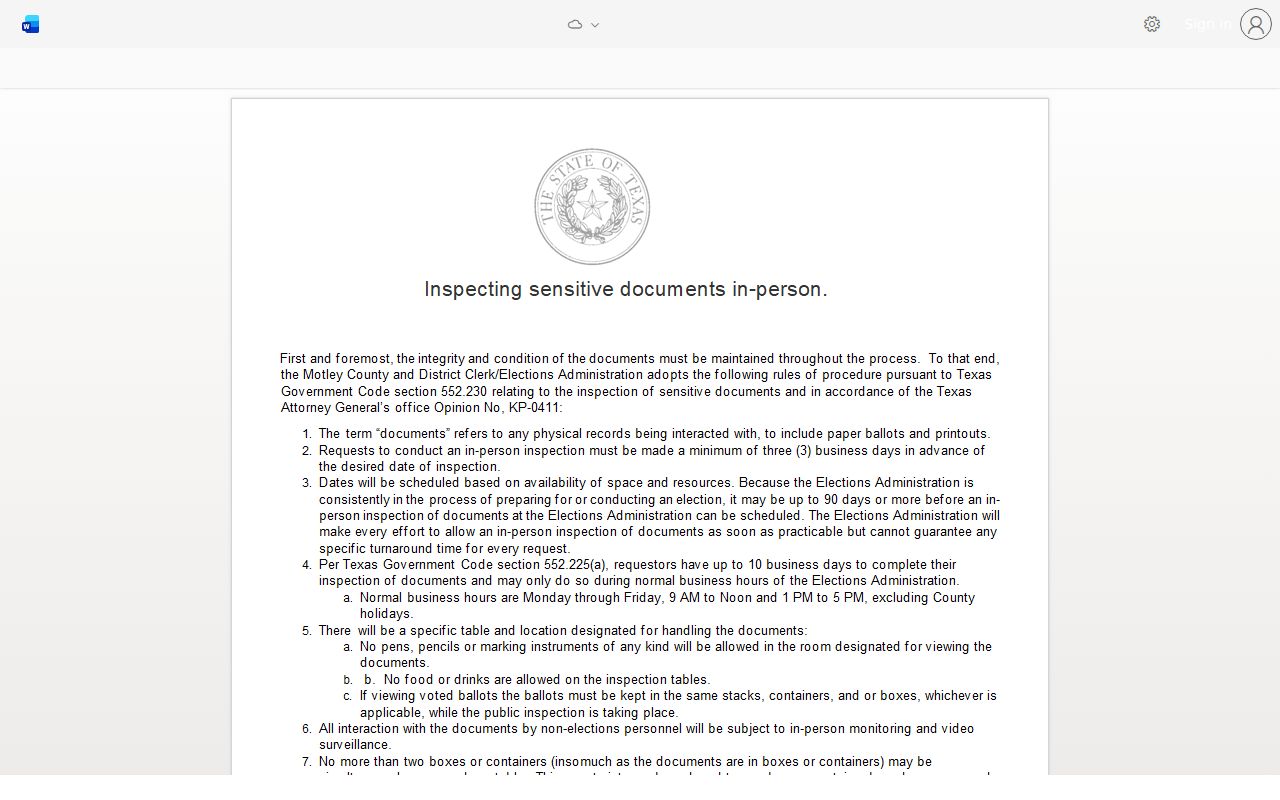
The policy image reinforces the first access question: identify the holder, then use the law and request channel that govern that record.
Motley County Case Clerk Confirmation
The combined County and District Clerk is the decisive fallback. Call 806-347-2621, visit 701 Dundee Avenue in Matador, or mail PO Box 660, Matador, TX 79244. Public hours are Monday through Friday, 9 a.m. to noon and 1 p.m. to 5 p.m. Ask before ordering because plain and certified criminal-copy fees were not found in the official source. The courthouse’s $1-per-page charge applies to a fax received there and should not be mistaken for a criminal document price.
Give the clerk a name, approximate filing year, cause number if known, offense level, and the court that may hold the matter. Ask for the charging instrument, docket, judgment, sentence, and appeal notice needed for the question. For broader context on a person’s county record trail, the Motley County criminal history overview distinguishes local court files from arrest, custody, and DPS repository records.
Combined County and District Clerk
701 Dundee Avenue
Matador, TX 79244
806-347-2621
Monday through Friday, 9 a.m. to noon and 1 p.m. to 5 p.m.