
Running a Sex Offender Check in Motley County
The official starting point is the free Texas Public Sex Offender Registry, which is administered by the Texas Department of Public Safety. It holds public registration information submitted through local authorities across Texas. For a Motley County search, choose the mode that fits what is known. A reliable spelling supports a name search. An address or map search helps with awareness near a home or other place. The higher-education mode serves a narrower campus-related purpose. DPS also links to subscription, registry download, and national search functions.
A Motley County registry hit should be treated as a registration record, not a full account of every court event. Check the listed authority, event date, address type, offense jurisdiction, conviction or adjudication date, status, and risk label. A geographic description may appear in place of a standard street address. If a Motley County entry seems stale, or if conduct suggests a person has not met a registration duty, contact the registering authority. Do not confront the person.
The DPS registration program overview explains how the state portal and public notice system fit together.
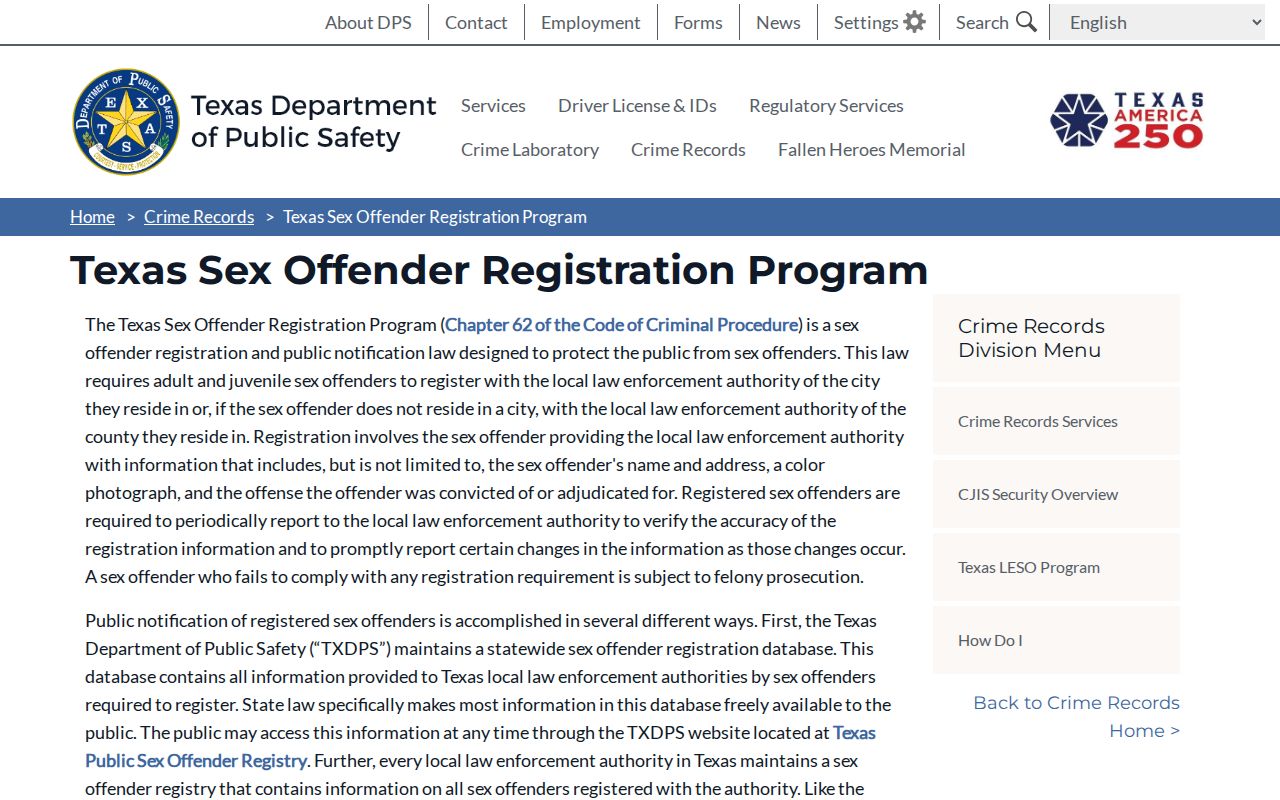
This official program view is the right bridge from general Texas rules to the searchable Motley County registry records.
Motley County Sex Offender Registration
Texas divides registration work by address. A municipal resident normally reports to the city police chief's office. A person who lives outside a municipality reports to the sheriff. Motley County needs an extra confirmation step because neither Matador nor Roaring Springs has a police agency listed in the official DPS NIBRS roster. The safe course is to call the Motley County Sheriff at 806-347-2234 and ask which authority handles the exact address.
The Motley County sheriff has not published a separate registry unit, appointment calendar, fee, or walk-in schedule. The official Motley County website does not identify another local registry counter. Its published mailing address is PO Box 715, Matador, TX 79244, and its fax is 806-347-2692. Call before sending documents or making a trip. Ask what proof of identity and residence is required, where registration occurs, and whether an appointment is needed. For a rural Motley County address beyond municipal limits, the sheriff is the statutory registration authority. For an address inside Matador or Roaring Springs, confirm the current arrangement rather than assuming a city counter exists.
Note: The lack of a city police listing does not prove that no special local arrangement exists, so telephone confirmation remains essential.
Searching the Texas Public Sex Offender Registry
The DPS registry offers three documented search routes for Motley County. Pick one route, enter only facts that can be checked, and clear the form before changing to a materially different search. The live site did not yield a verified list of radius choices during research. Use an available distance shown in the current form instead of relying on a value quoted elsewhere.
- Open the official DPS registry and review its conditions of use before entering search terms.
- Choose Map Address, Registrant Name, or Institute of Higher Education based on the fact you know.
- Review possible results by matching aliases, physical descriptors, address type, and other lawful public fields.
- Open the profile and confirm status, registering agency, event date, offense jurisdiction, and registration details.
| Field or Mode | Type | Required | Use |
|---|---|---|---|
| Map Address | Tab and form | Mode-dependent | Search by a location and choose an available distance in the live form. |
| Registrant Name | Tab and text fields | Mode-dependent | Enter first and last name. |
| Institute of Higher Education | Tab and selection | Mode-dependent | Select an institution for the campus-focused route. |
| Search and Clear | Buttons | Not applicable | Run the query or remove old criteria before a new search. |
Motley County Registry Search Modes
Name and map searches answer different questions in Motley County. A name search works best when the spelling is sound and can be checked against aliases and descriptors. An address search is better for awareness around a known place. The higher-education route should not be stretched into a general county query. Each route can produce a different result set because it begins with a different fact.
The official portal also offers Create Subscription, Download Registry, and National Sex Offender Search navigation. A subscription can help a Motley County user follow changes supported by the current system, but the live choices should be read before enrollment. A downloaded dataset requires the same care as an online profile. Dates, statuses, and registering agencies matter. Public data should never be copied into a private list and treated as more current than the source.
What a Registry Profile Shows
A Texas public profile for a Motley County result joins identity clues with registration, offense, and status data. It can include a name, aliases, date of birth, physical description, photograph, and residential address or geographic description. It can also identify the registration agency and event, offense statute and jurisdiction, conviction date, punishment, victim-age category, status, numeric risk, institution information, and qualifying vehicle data when collected. Read the fields together. One shared name is not enough to assume a match.
| Name and Aliases | Public identity names used to distinguish a registrant and support careful matching. |
|---|---|
| Photo and Description | Photo plus sex, race, height, weight, eye color, and hair color when published. |
| Registered Address | A residence address or detailed geographic description when a standard address is unavailable. |
| Offense and Statute | Offense, legal citation, jurisdiction, conviction date, punishment, and victim-age category. |
| Risk and Status | Numeric risk, current status, registration agency, and registration event information. |
| Other Public Data | Institution information and qualifying vehicle details when the law and collected record permit display. |
The DPS registry FAQ documents the public fields, duration rules, verification cycle, and notification process.
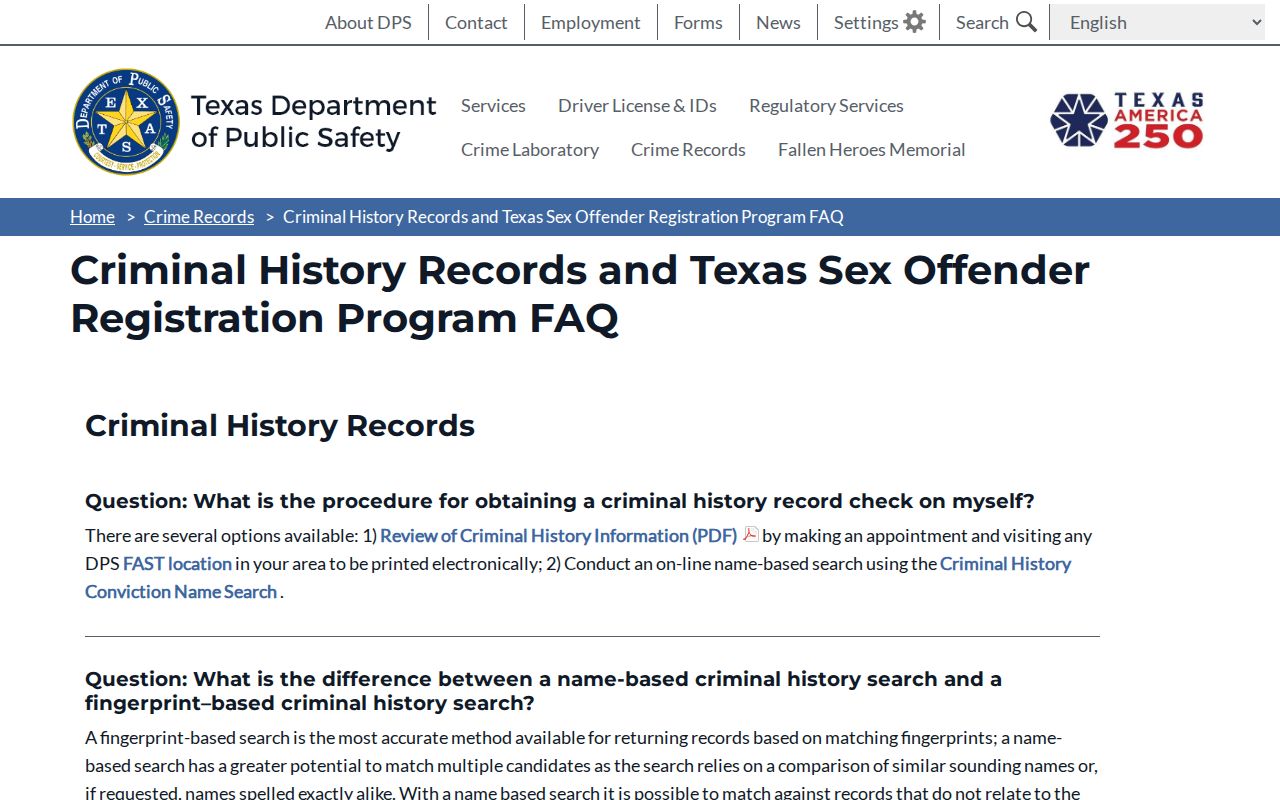
This source helps separate a profile's visible facts from assumptions that the public record does not support.
Motley County Registry Data Boundaries
The local Motley County registration intake contains more data than the public registry displays. Protected fields include Social Security numbers, driver's license numbers, telephone numbers, online identifiers, employer details, victim identity, certain DPS-only information, and juvenile data that a court has ordered nonpublic. Scar and tattoo display could not be confirmed through a successful live inspection, so it should not be assumed.
This Motley County data boundary is deliberate. Code of Criminal Procedure Chapter 62 makes most registry information public while shielding listed identifiers and victim information. It also means an empty public field is not proof that the local authority never collected the fact. The public search is designed for awareness, not unrestricted access to the full intake file.
Texas nondisclosure follows another access rule entirely. The official nondisclosure forms show routes that restrict public criminal-history dissemination, while the research identifies registrable sex offenses among serious disqualifiers.
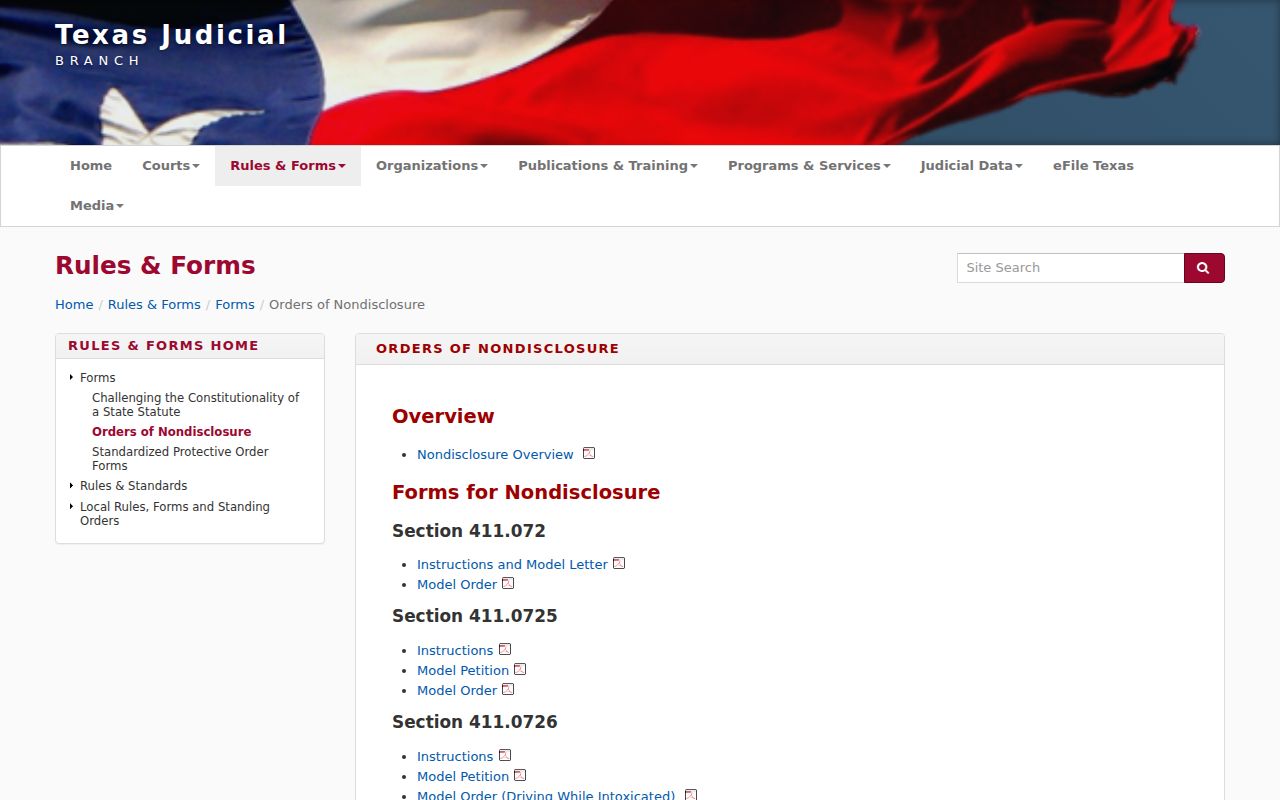
The contrast matters: an order that limits access to eligible criminal history is not a shortcut around a valid Chapter 62 registration duty.
Note: A public registry profile is not the same file as a DPS criminal-history name result or a Motley County court case.
Registration Requirements and Levels in Texas
Texas risk labels on Motley County profiles describe assessed danger. They are not the federal SORNA tiers, and they do not set the registration term by themselves. The offense category and procedural history under Chapter 62 control duration. Adult registration commonly lasts for life or until the tenth anniversary after the later statutory endpoint. Juvenile, transferred-juvenile, federal, military, and out-of-state obligations can follow different rules.
| Texas Level or Status | Meaning | Duration and Verification |
|---|---|---|
| Level 1, low | Low danger and not assessed as likely to continue sexual criminal conduct. | Offense controls duration; ordinary verification may be annual. |
| Level 2, moderate | Moderate danger and may continue sexual criminal conduct. | Offense controls duration; risk label alone does not set a term. |
| Level 3, high | Serious danger and assessed as likely to continue. | Stronger notice applies; duration still follows the offense. |
| Civil Commitment | Separate sexually violent predator status with intensive supervision and treatment. | Verification every 30 days. |
People with two or more sexually violent offenses verify every 90 days. Others generally verify each year. Initial registration in Motley County occurs no later than the later of seven days after arrival or the authority's first policy-allowed date. Planned moves and regular stays elsewhere can create more reporting events. These timing rules are why the current event date and registration authority deserve close attention.
Motley County Registry and NSOPW
The DPS registry is the best first source for a Motley County address because it provides Texas fields and Texas registration context. The National Sex Offender Public Website, or NSOPW, is a separate federal search that draws from participating jurisdictions. It can search by name or by an address and radius. That makes it useful when a person or address may connect to more than one state, territory, or tribal jurisdiction.
NSOPW does not turn all state systems into one identical record. Profile detail depends on the contributing jurisdiction. Follow a result back to the source registry and use the current official entry for status and contact information. For an apparent Motley County match, compare the Texas record, then call the local registration authority if a report or correction is needed.
The official NSOPW search screen shows the national name and location layer.
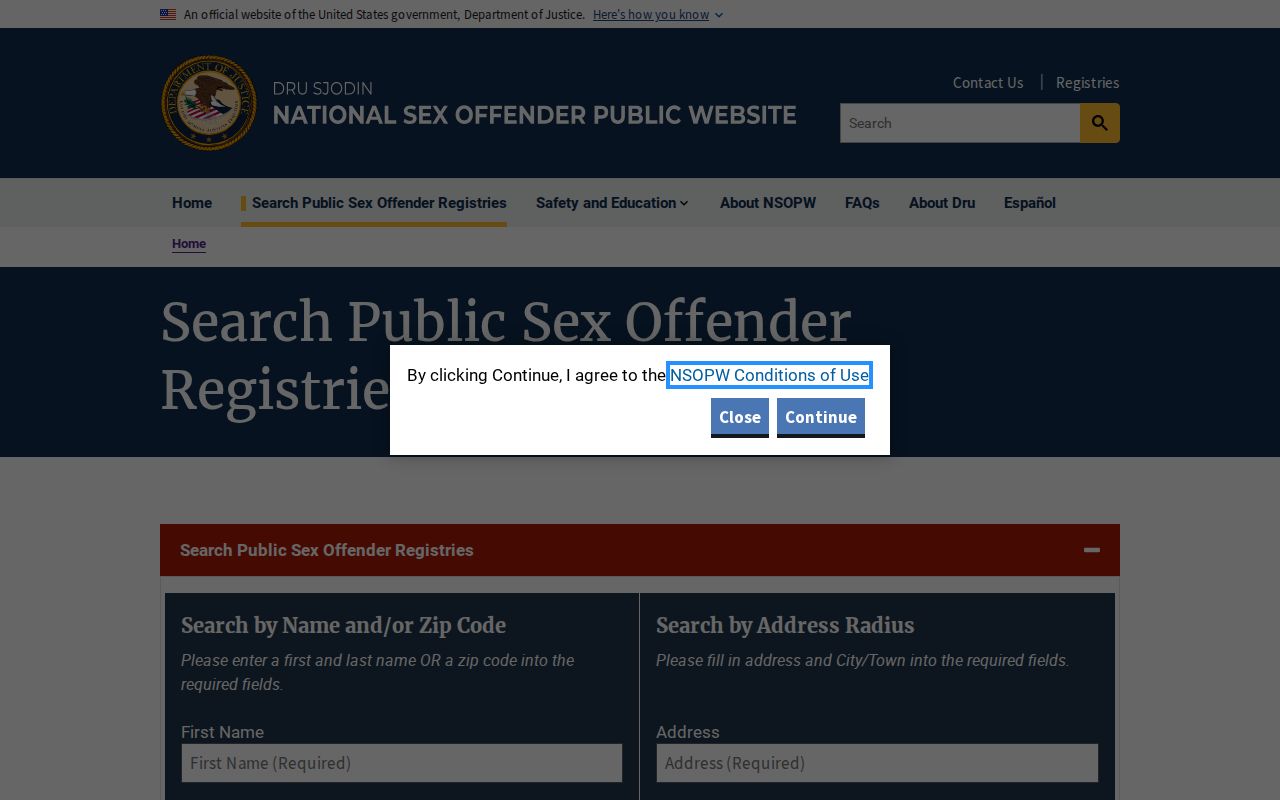
This cross-state source adds reach, while Texas DPS remains the source for the detailed state registry entry.
Motley County Registry Notification
Community notice can take several forms in Motley County and across Texas. State and local databases provide broad public access. Local publication may apply, and DPS may send English and Spanish postcards when a high-risk or civilly committed person moves or is released. Level 3 statutory notice reaches at least addresses within one mile in an unsubdivided area or three blocks in a subdivided area. These are notice zones, not a universal rule barring residence in that space.
Chapter 62 does not create one blanket statewide school or park distance for every registrant. A supervision condition or an authorized local ordinance may impose a limit in a given case. Check the exact legal source before drawing a conclusion from a map pin alone.
Suspected noncompliance should go to the authority responsible for the address. In Motley County, begin with the sheriff at 806-347-2234 when the correct city registrar is unclear. The DPS sex offender registration administrative line is 512-424-2800. Give a clear, factual account and let the agency investigate. If a profile seems wrong, record the entry and date, then report the concern to the local authority and DPS.
Lawful Use and Community Notification
Registry information supports awareness and practical safety plans. Read a profile in context, verify the date, and use official channels to address an error or possible lapse. A risk label is an assessment, not a promise about future conduct. Nor does a pin on a map establish that a person violated a residence rule. Facts should be checked with the registering authority before anyone acts on them.
Texas access law also draws firm lines around what the public may see. Chapter 62 protects victim details and specified personal identifiers. The broader Texas criminal-history rules in Government Code Chapter 411 do not turn the registry into an all-purpose screening product. Motley County also publishes its local public-information policy, though a general records request does not override Chapter 62 confidentiality. For the countywide path across court, sheriff, and state records, use the Motley County criminal history overview and keep each source in its proper role.
Misuse is a crime: Texas Code of Criminal Procedure Chapter 62 forbids using registry information to injure, harass, or commit a crime against a registrant or the person's family. Use public data for safety and information, never threats, confrontation, or vigilantism.